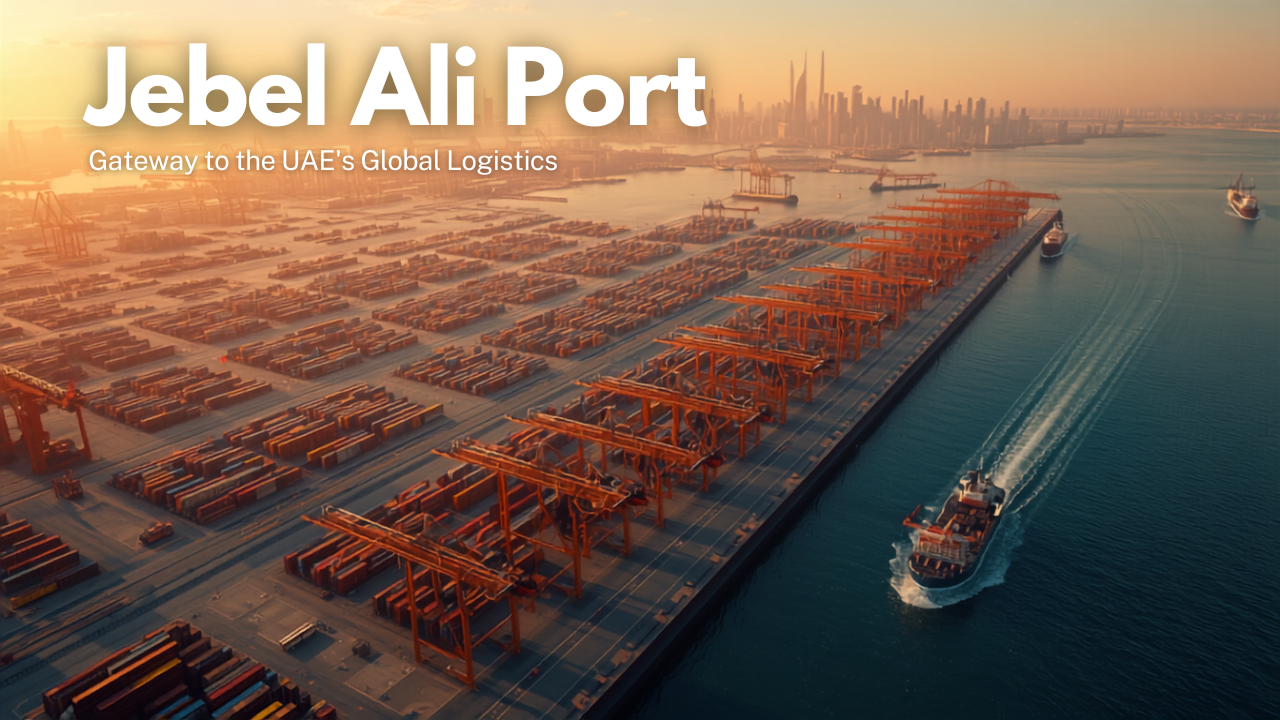
The UAE processed over 17 million TEUs through its ports in 2025, with Jebel Ali (Dubai) ranking as the world's 9th busiest container port. The country's position as a regional hub for re-export to the broader Middle East, South Asia, and East Africa makes UAE customs fluency essential for importers serving this corridor - whether goods are destined for local consumption or transiting to neighboring markets.
The UAE's customs system has advanced significantly since the Federal Customs Authority's digitization initiatives. Most declarations are processed through Mirsal 2 (Dubai) or equivalent emirate systems, with risk-based selectivity determining examination requirements. When documentation is correct and compliant, clearance can happen within 24-48 hours. The complexity lies in knowing exactly which documents are required for which goods - and which regulatory bodies beyond customs have approval authority.
The UAE Customs Framework
Customs in the UAE operates at both federal and emirate levels. The Federal Customs Authority (FCA) sets federal policy and tariff schedules. Individual emirate customs departments (Dubai Customs, Abu Dhabi Customs, Sharjah Customs) implement daily operations. The UAE applies the Gulf Cooperation Council (GCC) Unified Customs Law and the GCC Common External Tariff.
Standard import duty rate: 5% CIF value for most goods. Exceptions: 0% on basic foodstuffs, certain medicines, and agricultural inputs; 100% on alcohol and tobacco products (with additional excise duties). The UAE applies a 5% VAT on most imports and domestic transactions.
Required Documents for UAE Customs Clearance
Core Documentation
- Commercial invoice: Must include seller and buyer details, item description (matching HS code), quantity, unit price, total value, currency, and Incoterm. UAE customs verifies against market value databases for undervaluation detection.
- Bill of lading or airway bill: Original or telex release for ocean; airway bill for air cargo.
- Packing list: Detailed breakdown matching invoice quantities exactly.
- Certificate of origin: Required for all imports. Determines duty rate (GCC origin: duty-free; other origins: 5% standard rate; some products from specific countries face anti-dumping measures).
- Dubai Trade declaration: Electronic declaration lodged through Dubai Trade portal (for Dubai Customs) or equivalent emirate system.
Regulatory Agency Approvals (Product-Specific)
- ESMA (Emirates Authority for Standardization and Metrology): Product conformity marking required for electronics, appliances, toys, cosmetics, building materials, and others. The UAE Conformity Mark (E-Mark) must be present on regulated products.
- MOH/MOHAP (Ministry of Health and Prevention): Import permit required for pharmaceuticals, medical devices, cosmetics, and food supplements.
- MoCCaE (Ministry of Climate Change and Environment): Permit for agricultural goods, animals, animal products, and certain chemicals.
- TRA (Telecommunications and Digital Government Regulatory Authority): Type approval for telecommunications equipment, including mobile phones and networking devices.
- Dubai Municipality / Abu Dhabi Department of Economic Development: Food products require municipality approval and halal certification where applicable.
Free Zone Imports: Key Differences
The UAE hosts over 40 free zones, each with its own regulatory authority and customs procedures. The largest - Jebel Ali Free Zone (JAFZA), Dubai Multi Commodities Centre (DMCC), Dubai Airport Free Zone (DAFZA) - collectively handle a substantial portion of UAE trade. Key differences for free zone importers:
- Duty-free import: Goods imported into designated free zones are not subject to UAE customs duties as long as they remain within the free zone or are re-exported. Duty is assessed only when goods enter UAE mainland from the free zone.
- Simplified documentation for transit: Goods transiting through UAE free zones to third countries benefit from simplified transit procedures and lower documentation requirements.
- Separate regulatory framework: Free zone businesses are licensed by the free zone authority, not the mainland Department of Economic Development. Import and re-export licenses are issued by the free zone authority.
Dubai Customs Mirsal System
Dubai Customs operates through the Mirsal 2 system, accessible via the Dubai Trade portal. Key features:
- Pre-arrival declaration: Importers submit declarations before vessel arrival. Risk profiling assigns clearance channel.
- Green channel (documentary release): Majority of low-risk shipments. Duty paid, documents verified electronically, cargo released without physical examination.
- Red channel (physical examination): Physical inspection by customs officer. Can add 2-5 days.
- Advance cargo information: Dubai Customs requires advance notification for certain goods categories - 24 hours for air freight, 48 hours for sea freight - to enable pre-arrival risk assessment.
UAE Import and Compliance Frequently Asked Questions
What is the standard import duty rate in the UAE?
The standard import duty rate is 5% of the CIF (Cost, Insurance, Freight) value for most goods under the GCC Common External Tariff. Notable exceptions: 0% on many basic foodstuffs, essential medicines, and certain raw materials; 100% on alcohol and tobacco (plus excise duties - 100% on tobacco products, 50% on carbonated drinks, 100% on energy drinks); 25% on some food products. GCC-origin goods are duty-free under the GCC free trade area. Additionally: 5% VAT applies to most imports on the aggregate of customs value plus duties.
How long does customs clearance take at Jebel Ali Port?
For compliant declarations with complete documentation: 1-3 days for green channel clearances at Jebel Ali. Air freight at Dubai Airport (DAFZA) can clear in 4-24 hours for pre-approved declarations. Physical examination (red channel) adds 3-7 days. Practical dwell time including terminal handling: 4-7 days total for most importers. Jebel Ali is notably faster than most regional peers for compliant shipments - the system is designed for efficiency at volume.
Do I need an agent to clear goods through UAE customs?
Commercial importers must use a licensed customs clearance agent registered with the relevant emirate customs authority. Self-clearance is not permitted for commercial imports. Agents file declarations through Mirsal 2 or equivalent emirate systems. Personal imports (non-commercial, baggage) can be self-cleared at arrival. For free zone imports, clearance is handled by the free zone authority and its licensed agents.
What is the UAE's e-commerce import threshold?
The UAE applies a duty-free threshold of AED 1,000 (approximately $272) for e-commerce imports via postal and courier channels. Below this value, no customs duty applies (but VAT may apply). Above AED 1,000, standard 5% duty and 5% VAT apply. For commercial importers, the de minimis threshold is separate from commercial invoices - all commercial consignments face duty assessment regardless of value.
How does the UAE's GCC free trade area affect duty rates?
The GCC Customs Union applies zero duty on goods of GCC origin (Saudi Arabia, Kuwait, Qatar, Bahrain, Oman) moving between member states, provided goods meet rules of origin requirements (typically minimum 40% value-added in the GCC country of origin). For importers supplying GCC regional markets through UAE, this means UAE is an effective transit hub - goods cleared through Jebel Ali can move to Saudi Arabia, Qatar, or Oman under GCC transit procedures with preferential or zero duty treatment.
What goods are prohibited for import into the UAE?
Prohibited goods include: narcotics and controlled substances, counterfeit goods, goods offensive to Islamic values (pornographic material, certain gambling equipment), certain food products not meeting UAE/Gulf standards, endangered species products (CITES-listed), and Israeli-origin goods (though this is evolving following normalization agreements). Restricted goods (requiring special permits): firearms and weapons, pharmaceuticals, religious materials, art and antiques, live animals. Check with UAE customs or a licensed agent before shipping any potentially sensitive product category.
Key Takeaways
- The UAE applies a standard 5% import duty on most goods under the GCC Common External Tariff, plus 5% VAT.
- ESMA E-Mark conformity is required for electronics, appliances, and other regulated categories before customs filing - not after arrival.
- Green channel clearances at Jebel Ali complete in 1-3 days when documentation is complete and declarations are pre-filed.
- Free zone imports are duty-free while goods remain within the zone - duty is assessed only when goods enter the UAE mainland.
- The GCC Customs Union provides duty-free movement of GCC-origin goods between the UAE, Saudi Arabia, Qatar, Kuwait, Bahrain, and Oman.
Tracking shipments through UAE ports and free zones? See how QueChains provides visibility across Middle East logistics corridors.
Written by the QueChains Editorial Team
Talk to our team about how QueChains can transform your supply chain operations.