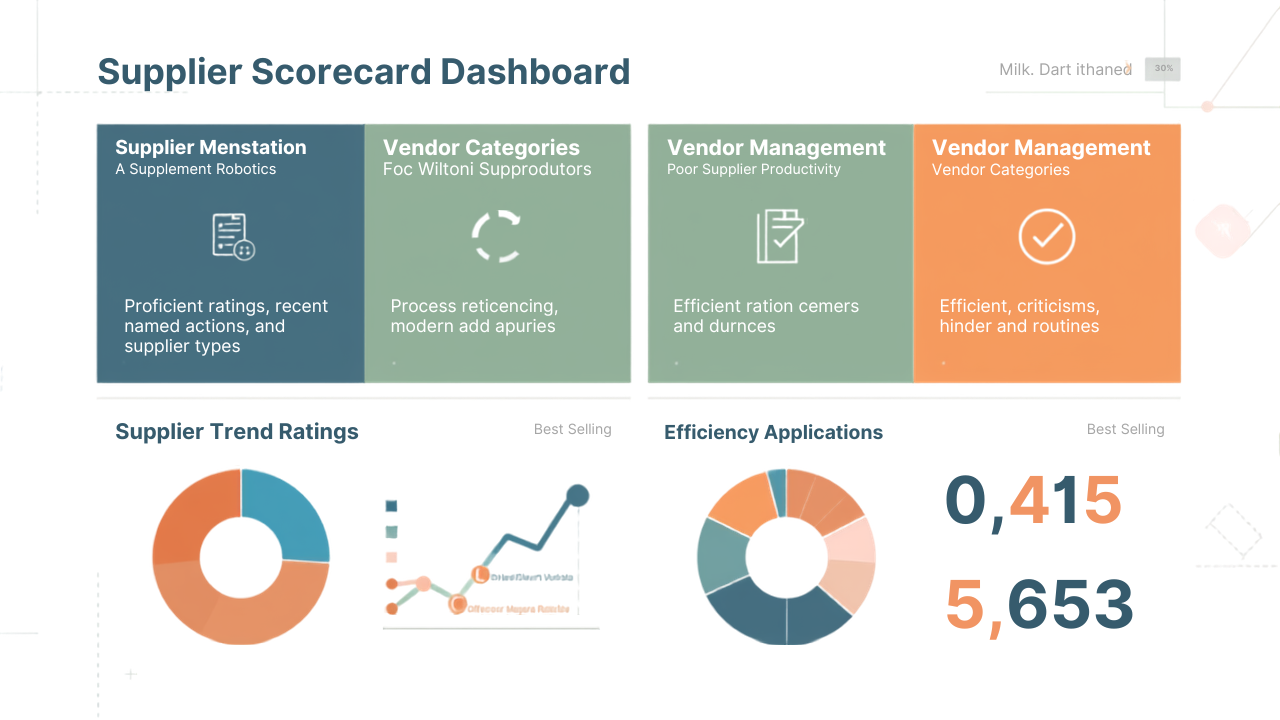
The procurement director at a manufacturing company in Vietnam showed me their supplier management system dashboard. It was beautiful - color-coded performance tiles, trend charts, risk indicators. Every supplier rated green. I asked when the data was last updated. "We ask suppliers to self-report quarterly." The last update was seven months ago. The dashboard was a visualization of old data that nobody had time to refresh - useless for the decisions it was supposed to support.
That failure mode - technically sophisticated systems fed by stale, manually-entered data - is the most common supplier management implementation problem. The fix isn't a better platform. It's fixing the data flow before selecting the platform.
What a Supplier Management System Does
A supplier management system (SMS) centralizes the data and processes required to manage relationships with the organizations that supply your business. Core capabilities:
- Supplier master data: Single source of truth for all supplier information - contact hierarchy, banking details, certifications, capacity, payment terms, compliance status
- Onboarding and qualification: Structured workflow for bringing new suppliers into the approved vendor list, including document collection, compliance checks, and capability assessment
- Performance scorecarding: Automated or semi-automated KPI tracking across delivery, quality, responsiveness, and compliance dimensions
- Risk monitoring: Financial health indicators, sanctions screening, geographic and category risk alerts
- Contract and compliance management: Tracking of contract terms, renewal dates, certification expiration, and regulatory compliance status
- Collaboration portal: Shared communication channel for RFI/RFQ responses, document exchange, issue tracking, and capacity reporting
The Make-or-Break: Data Source Strategy
Before selecting a platform, answer: where will performance data come from? The options:
- ERP integration: PO receipts, quality rejection records, and invoice processing data flow from the ERP automatically. Best option for operational data - no manual entry, always current.
- Logistics platform integration: On-time delivery data from your shipment tracking system flows automatically. Enables objective delivery performance measurement.
- Supplier self-reporting: Capacity, lead times, quality metrics reported by suppliers via a portal. Necessary for data your internal systems don't capture - but must be treated as self-declared and periodically verified.
- Third-party data: Financial health scores from Dun & Bradstreet or similar, news monitoring for supplier incidents, sustainability ratings from EcoVadis or similar.
The highest-performing supplier management implementations automate ERP and logistics data feeds, minimizing manual supplier self-reporting for operational KPIs. Self-reporting is reserved for capability data (capacity, certifications) that systems can't capture automatically.
Supplier Segmentation as a Design Input
Your supplier management system should be configured differently for different supplier tiers. Before system design, segment your supplier base:
- Strategic (5-15%): High spend, critical to operations, limited alternatives. Full feature deployment - scorecarding, risk monitoring, quarterly business reviews via the platform, joint KPI setting.
- Preferred (20-30%): Regular suppliers with established relationships. Lighter scorecarding, annual review cadence, self-service portal for document submission.
- Approved (50-70%): Infrequent or low-spend suppliers. Minimal management overhead - basic onboarding data, compliance certificates, available when needed.
A common mistake is applying the same data collection and review processes to all suppliers regardless of tier. This creates administrative overhead that exhausts procurement teams without producing value proportional to the effort.
Implementation Phases
Phase 1: Data Foundation (Weeks 1-8)
Clean and migrate supplier master data. Segment suppliers. Configure ERP integration for PO and quality data. Define KPI frameworks by supplier tier. Do not launch the platform until the data foundation is solid.
Phase 2: Pilot with Strategic Suppliers (Weeks 9-16)
Onboard your top 10-15 strategic suppliers first. Configure scorecards collaboratively - agree on the KPIs, data sources, and weighting with each strategic supplier. Use quarterly business review cycles to validate the data and process before broader rollout.
Phase 3: Broader Rollout (Weeks 17-24)
Roll out to preferred and approved supplier tiers with lighter-touch configuration. Migrate supplier onboarding to the platform for all new suppliers. Train procurement team on ongoing use.
Supplier Management System Frequently Asked Questions
How do you measure supplier on-time delivery accurately?
On-time delivery = (purchase orders delivered on or before agreed delivery date / total purchase orders delivered in period) - 100. The complexity is in "agreed delivery date" - some companies measure against original PO date, others against the most recent confirmed date. Define this consistently: tracking against original PO date measures supplier reliability; tracking against most recent confirmed date measures logistics execution. Use both for different purposes.
What supplier data should be in the system at go-live?
Minimum viable supplier profile at go-live: legal entity name and registration number, primary contact (name, email, phone), payment terms, banking details, country of operation, primary supply category, and any active compliance certifications with expiration dates. Additional data (capacity, lead times, secondary contacts, contract terms) can be added over time. Don't delay go-live to achieve a perfect data set - populate the minimum, launch, and enrich over the first 90 days.
How do you get suppliers to engage with a supplier portal?
Supplier portal adoption requires giving suppliers something valuable in return for their time. What works: real-time PO status visibility (so they don't have to email to confirm orders received), direct invoice submission with faster payment processing, clear communication of your payment schedules, and access to their own performance data (most suppliers want to know their scores). What doesn't work: portals that require suppliers to enter data with no benefit to them - these get abandoned quickly.
When should supplier management trigger a qualification review?
Automatic triggers for qualification review: on-time delivery rate drops below 85% for two consecutive quarters, quality rejection rate exceeds 2%, financial health score declines significantly (D&B rating change), any sanctions screening flag, significant ownership or management change, natural disaster or conflict event in supplier's operating location, or when contract value increases beyond the original qualification scope.
What is dual sourcing and when should it be implemented?
Dual sourcing is qualifying two or more suppliers for the same component or material. It should be implemented when: a supplier is single-sourced for a high-spend or operationally critical item, a supplier's on-time delivery rate is consistently below 90%, geographic concentration creates correlated risk (both primary and backup suppliers in the same country), or a supplier's financial health is declining. The cost of dual sourcing (higher unit costs from split volume, qualification costs) must be weighed against the risk cost of supply disruption from a single source.
Key Takeaways
- A supplier management system is a data system first and a relationship tool second - reliable data flows determine the value of any platform.
- Automate ERP and logistics data feeds for operational KPIs; reserve supplier self-reporting for capability data systems cannot capture.
- Pilot with strategic suppliers first - agree on KPIs, data sources, and weighting collaboratively before wider rollout.
- Give suppliers something valuable in the portal (PO visibility, faster payment processing) to drive adoption - portals with no supplier benefit get abandoned.
- Trigger qualification reviews automatically when on-time delivery drops below 85%, quality rejection exceeds 2%, or financial health scores decline.
Ready to connect real delivery performance data to your supplier scorecards? See how QueChains feeds live shipment data into supplier management systems.
Written by the QueChains Editorial Team
Talk to our team about how QueChains can transform your supply chain operations.