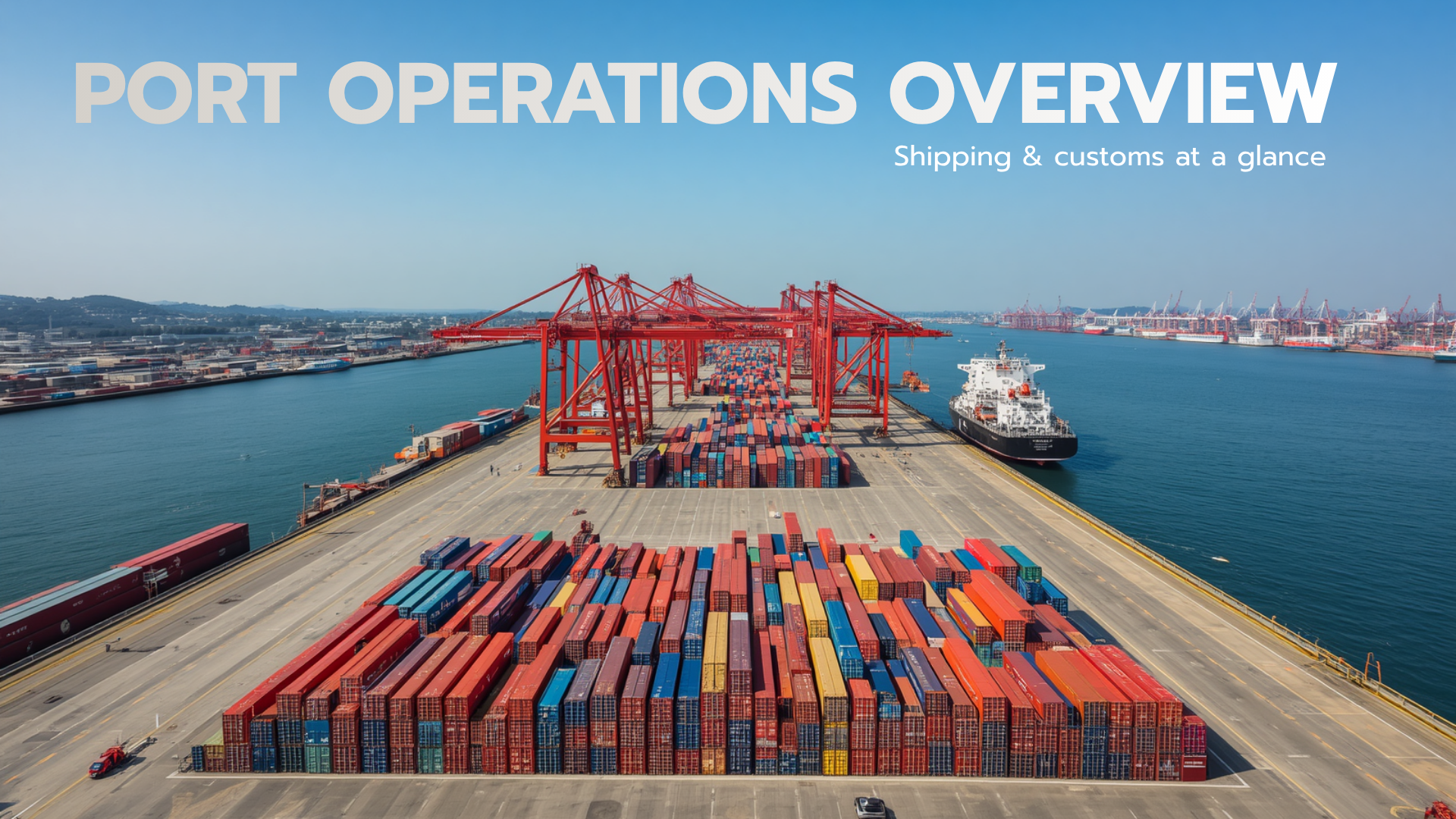
The text came in at 2:47 AM Lagos time: "Container held at inspection. HS code mismatch." The shipment - 200 cartons of industrial sensors - had been sitting at Apapa Port for three days already. Now it would be at least another week.
The HS code on the commercial invoice read 8543.70.90 (other electrical machines). The actual product category should have been 9031.80.90 (measuring instruments). Someone in the export documentation team had copied the code from a previous shipment of different goods. The customs officer caught it during the red-channel physical inspection. Now the importer was facing resubmission, penalty fees, and mounting demurrage charges.
I've seen this exact scenario play out in different variations across three continents. The product changes. The port changes. The consequence is always the same: preventable delays driven by data quality failures upstream.
The Scale of Declaration Errors
A 2023 International Chamber of Commerce study found that over 15% of all customs declarations globally contain errors, with HS code misclassification identified as the leading cause. That's one in seven declarations. If you're filing 100 declarations a month, statistically, 15 of them have errors significant enough to cause delays or penalty assessments.
The impact varies by corridor and commodity, but the patterns are consistent. In one heavily documented case study of high-value electronics imports into India, over 50% of shipments faced clearance delays specifically due to HS code errors and incomplete documentation. Roughly 90% of customs-related disputes in that market traced back to HS code classification issues.
The timeline cost is predictable: a typical HS code misclassification adds 2-7 business days to clearance while the declaration is corrected and resubmitted. In that window, you're paying port storage fees, often demurrage charges if the container free time has expired, and your customer is asking why their goods haven't arrived yet.
But here's what the aggregate statistics don't capture: the human frustration. The operations manager who triple-checked the documentation and still got hit with a hold because someone upstream in the ERP entered the wrong product classification six months ago. The customs broker who has to explain to a client why the same mistake happened three times in a row because the root data issue was never fixed. The finance team trying to reconcile unexpected compliance penalty invoices that arrived weeks after the shipment cleared.
Why Declarations Get Flagged
Customs authorities operate risk-based screening systems. Not every shipment gets physically inspected, but every declaration gets scanned for discrepancies that trigger holds. The most common flags I've encountered across multiple jurisdictions:
HS Code Misclassification: The declared code doesn't match the product description or the actual goods being shipped. This happens most often when exporters copy codes from previous shipments without verifying they're correct for the current cargo.
Invoice Value Mismatches: The declared customs value doesn't align with the commercial invoice total, or line-item values don't sum correctly. Customs systems are increasingly automated, and they flag mathematical inconsistencies instantly.
Missing or Expired Certificates: Product-specific import permits, certificates of origin, phytosanitary certificates for agricultural goods, or SONCAP certificates for regulated products into Nigeria. If it's required and not attached, the declaration won't clear.
Country of Origin Errors: The declared origin country doesn't match manufacturing location or doesn't qualify for claimed preferential tariff treatment under free trade agreements. This is especially common for goods transshipped through multiple countries.
Incorrect Incoterms: The declared Incoterm on the customs form doesn't match the sales contract, leading to confusion about who pays duties and where risk transfers. This doesn't always cause a hold, but it can trigger a customs review that delays clearance.
Sanctions or Restricted Party Flags: The consignee, shipper, or product appears on a sanctions list or restricted party database. This is an automatic hold, often requiring manual review and significant documentation to resolve.
In my experience, the vast majority of these issues originate upstream - in ERP product catalogs, in template documents that weren't updated, or in manual data entry during shipment booking. By the time the goods reach the port, the error is baked into the paperwork. Fixing it requires resubmission, often with penalties attached.
A Pre-Submission Validation Checklist
The fix isn't more staff. It's systematic validation before the declaration is submitted to customs. Here's the checklist I recommend every operations team implement:
1. Validate HS Codes Against a Product Library: Maintain a master catalog of your regularly shipped products with verified HS codes for each destination country. Don't rely on memory. Don't copy codes from previous shipments unless you've confirmed they're correct. Tariff classifications change, and a code that worked last year might be wrong today.
2. Tie Line-Item Values to Invoice Totals: Use automated checks to ensure that declared customs values match the commercial invoice exactly. If your platform calculates totals automatically from line items, you eliminate the entire class of math errors that trigger holds.
3. Attach Correct Incoterms and Country of Origin: Pull this data directly from the sales order or master shipment record. If you're manually typing it into a declaration form, you're introducing error risk. Automation removes the opportunity for typos.
4. Run Sanctions and Restricted Party Screening at Onboarding: Screen your suppliers, customers, and consignees against OFAC, EU, and UN sanctions lists before the first transaction. Don't wait until you're at the port. Screening after the fact means goods are already in transit when you discover a compliance issue.
5. Pre-flight Check on Required Certificates: Different products require different permits depending on destination. Medical devices need specific approvals. Agricultural goods need phytosanitary certificates. Electronics might need compliance certificates. Maintain a requirements matrix by product and country, and flag missing documents before booking the shipment.
6. Cross-Reference Against Previous Declarations: If you've successfully cleared this product through this port before, compare the current declaration to the past one. Significant deviations - different HS code, different value structure - should trigger a manual review before submission.
The goal isn't perfection. The goal is catching errors while the documents are still editable, before they've been filed with customs. Fixing a mistake in your own system takes minutes. Fixing it after customs has flagged it takes days and often costs money.
Why Customs Errors Are Data Quality Problems
Here's the structural issue most companies miss: customs errors are almost never one-off mistakes. They're symptoms of upstream data quality problems that will keep producing errors until you fix the root cause.
I worked with an agricultural exporter in Ethiopia who kept getting HS code errors on coffee shipments. The customs broker would catch the mistake, correct the declaration, and resubmit. Two weeks later, the same error would appear on a different shipment. The problem wasn't the broker. The problem was that the ERP product catalog had the wrong HS code for roasted coffee versus green coffee. Every time someone created a shipment record from that product entry, the wrong code would populate automatically.
Once they corrected the master data in the ERP, the error stopped appearing on new declarations. One upstream fix eliminated dozens of downstream corrections.
That pattern repeats across every data field in a customs declaration. If your master supplier database has incorrect country-of-origin data, every shipment from that supplier will carry the wrong origin. If your product catalog has outdated duty rates, your cost estimates will be wrong on every quote. If your template commercial invoice uses the wrong currency code, every declaration will require manual correction before submission.
Integrated platforms that pull declaration data directly from validated master records eliminate this entire class of error. You fix the data once, at source, and every subsequent declaration is correct by default.
The Cost of Getting It Wrong
The financial impact of a customs hold compounds quickly. Here's a real example from a pharmaceutical importer in Kenya I consulted for last year:
- Container dwell time at port: 11 days (typical for a red-channel hold requiring document correction and resubmission)
- Port storage fees: $45/day x 11 days = $495
- Demurrage charges (container detention beyond free time): $75/day x 6 days = $450
- Customs broker resubmission fees: $300
- Penalty assessment for incorrect declaration: $800
- Expedited customs clearance fee after correction: $150
- Opportunity cost (lost sales due to delayed inventory): estimated $2,000+
Total direct cost: $4,195 for one shipment, driven by an HS code error that could have been caught with a two-minute pre-submission validation check.
And that's assuming no product degradation. For temperature-sensitive goods - vaccines, fresh produce, certain chemicals - a multi-day customs hold can mean complete cargo loss. I've seen an entire shipment of vaccines declared unsalvageable after a five-day customs hold caused cold-chain failure. The financial loss was in the hundreds of thousands. The reputational damage to the importer's relationship with health authorities was incalculable.
Even for non-perishable goods, there's an operational cost: the time your customs broker, operations team, and finance staff spend resolving the issue instead of doing productive work. I've watched customs brokers spend entire afternoons on the phone with customs officers, compiling supporting documentation for declarations that should have cleared automatically if the data had been right the first time.
Frequently Asked Questions
How often should we update our HS code library to ensure accuracy?
HS codes can change during World Customs Organization review cycles (typically every 5 years for major revisions), but individual countries may update tariff schedules annually. Best practice: review your product HS codes every January before the new tariff year begins, and flag any products where you've seen customs queries in the past year for immediate re-verification. For high-volume products, consider annual consultation with a licensed customs broker who specializes in your product category.
What's the difference between an HS code error and a tariff classification dispute?
An HS code error is when the declared code is objectively wrong - it doesn't describe the product being shipped. A classification dispute is when the code is defensible but customs believes a different code is more accurate, often because classification rules allow for interpretation. Errors are usually quick to fix once identified. Disputes can require detailed technical documentation, lab test results, or formal rulings from customs authorities and may take weeks or months to resolve.
If we use a customs broker, why do we still need to validate declaration data ourselves?
Your broker is working from the data you provide. If your commercial invoice has the wrong HS code, your broker will often file it as-is unless they catch the error during their own review (not guaranteed). You're ultimately responsible for the accuracy of your declarations, even when you hire a broker to file them. Pre-validating data before sending it to your broker reduces errors, speeds up their workflow, and lowers your compliance risk.
How do sanctions screening tools work, and how often should we run them?
Sanctions screening tools compare names and addresses against government watchlists (OFAC, EU, UN, etc.). Screen parties at onboarding (before first transaction), then periodically (monthly or quarterly) because lists update frequently. Many platforms offer real-time screening - each transaction is automatically checked against current lists before it's finalized. This is critical for compliance because a party can be added to a sanctions list between your onboarding check and your shipment date.
What should we do if customs flags a shipment for an error we believe is incorrect?
Document your reasoning with supporting evidence: product specifications, lab test results, prior successful declarations, official tariff guidance from the destination customs authority. Work through your customs broker to request a formal review. In some jurisdictions, you can request a binding advance ruling on product classification before you ship, which prevents disputes at the port. If the error stands and you disagree, most countries have a formal appeals process, though it can take months.
Can automated systems completely eliminate declaration errors?
Automation dramatically reduces errors but can't eliminate them entirely because classification rules often require human judgment. A system can validate that HS codes follow the correct digit format and that values sum correctly, but it can't always determine whether a product is "primarily of plastic" or "primarily of metal" for classification purposes. The goal is to catch all the mechanical errors (math, formatting, missing fields) automatically so humans can focus on the judgment calls.
Talk to our team about how QueChains can transform your supply chain operations.