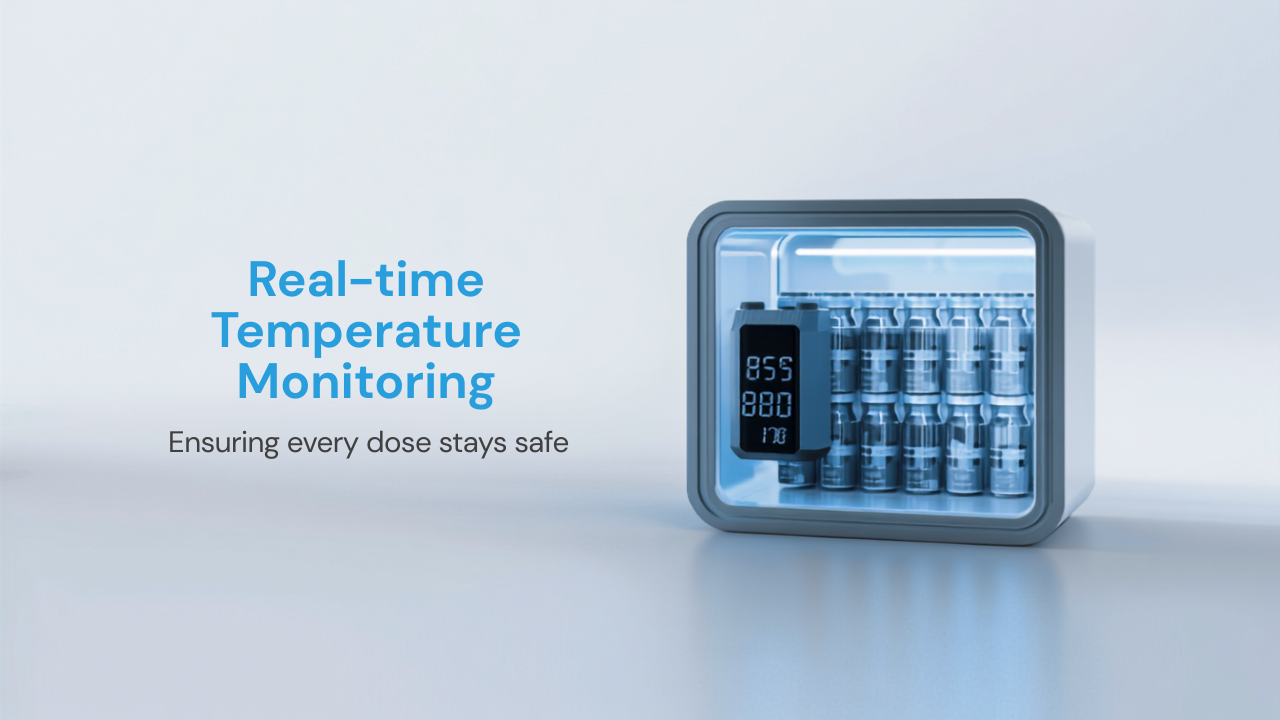
A shipment of insulin analogs arrived at a distributor in Nairobi showing perfect paperwork: refrigerated container, signed manifests, temperature certificates from the manufacturer. What the paperwork didn't show: a six-hour power outage at the transit warehouse in Dubai where the product spent three days in a cool room that hit 27°C. The temperature logger data existed - it just wasn't integrated with the shipping documentation.
The products were distributed. Three months later, a pattern of efficacy complaints triggered an investigation. By then, the affected product was already in patients' hands. The financial and reputational damage was severe. The root cause was a gap in cold chain data visibility that no one had connected.
What Is Pharmaceutical Cold Chain Management?
Cold chain management in pharmaceuticals refers to the integrated system of temperature-controlled storage, transportation, and monitoring required to maintain the quality and efficacy of temperature-sensitive medicines from manufacturing through patient delivery. The system must maintain product within a defined temperature range - typically 2-8°C for refrigerated biologics, -20°C to -80°C for deep-frozen vaccines, and 15-25°C for "controlled room temperature" products.
The regulatory framework is extensive. WHO Good Distribution Practices (GDP), EU GDP guidelines, US FDA 21 CFR Part 211 for manufacturing, and country-specific import regulations all specify requirements for temperature documentation, equipment qualification, deviation handling, and audit trails.
Where Cold Chain Failures Actually Occur
Industry data consistently shows the same failure distribution:
- Last-mile delivery (40% of failures): The segment between the distributor and the pharmacy, clinic, or patient. Least monitored, most variable, hardest to control.
- Transit hub handoffs (25%): Transfer between temperature-controlled transport and storage at airports, ports, or distribution centers. Short exposures that accumulate.
- Customs clearance delays (20%): Goods held in non-temperature-controlled customs zones waiting for documentation clearance. Duration unpredictable.
- Storage equipment failures (15%): Refrigerator malfunctions, power outages, door seal failures. Usually detectable if monitoring is in place.
The failure pattern reveals the most important insight: cold chain failures are primarily data failures, not equipment failures. The temperature excursions happen, but the data that would trigger a response doesn't reach the people who need to act. Temperature loggers record the excursion, but nobody downloads the logger before the shipment moves to the next leg.
Cold Chain Tracking Technology: Options and Trade-Offs
Passive Temperature Loggers
Single-use devices that record temperature over time, downloaded at the end of transit or at specific checkpoints. Pros: low cost ($5-15 per unit), no connectivity required, pharmaceutical-grade accuracy. Cons: data is only available after download - no real-time alerts, no in-transit intervention possible.
Active IoT Temperature Monitors
Connected devices that transmit temperature data continuously via cellular or satellite networks. Pros: real-time alerts, in-transit intervention possible, automated dashboard updates. Cons: higher cost ($50-200+ per device), connectivity gaps in remote areas, battery life limitations for long-haul shipments.
Cold Chain Visibility Platforms
Software platforms that aggregate temperature data from multiple device types and sources, correlating it with shipment records, location data, and customs status. The platform view solves the integration problem: temperature data alone is useless if it can't be associated with a specific shipment record and reviewed alongside other shipment events.
Regulatory Compliance Requirements
Documentation Requirements
Every temperature-sensitive shipment requires: temperature monitoring reports (continuous data, not just "average temperature"), equipment qualification certificates, deviation reports for any excursions, corrective action documentation, and chain of custody records. These documents must be retained for defined periods - typically 1-5 years depending on jurisdiction and product type.
Mean Kinetic Temperature (MKT)
MKT is the pharmaceutical industry's standard for evaluating temperature excursions. Rather than using simple averages (which understate the impact of brief high-temperature spikes), MKT applies the Arrhenius equation to weight temperature impact on product degradation. A shipment that averaged 6°C but spiked to 14°C for 2 hours has a higher MKT than its average suggests. Most regulatory agencies require MKT calculation for deviation assessment.
Excursion Management Protocols
An excursion - any temperature reading outside the specified range - triggers a defined process: record the deviation, assess the MKT impact, determine whether product quality is affected, decide on disposition (release, quarantine, or destroy), document the corrective action, and implement preventive measures. The entire process must be documented in a deviation report that becomes part of the product's batch record.
Cold Chain Tracking Frequently Asked Questions
What temperature range is required for refrigerated pharmaceutical products?
The most common range is 2°C to 8°C for refrigerated products (insulin, vaccines, biologics). "Controlled room temperature" products require 15-25°C. Deep-frozen products (some vaccines, certain biologics) require -20°C or lower. Ultra-cold products (mRNA vaccines) require -60°C to -80°C. The specific range is defined by the product's stability data and labeled storage conditions - deviating outside the labeled range, even briefly, may compromise product quality.
How long can a refrigerated pharmaceutical shipment tolerate temperature excursions?
This varies by product. Stability data defines the allowable cumulative excursion time and temperature for each product. Some products tolerate short excursions (up to 25°C for 48 hours for certain vaccines). Others have zero tolerance for excursion above 8°C. The Mean Kinetic Temperature calculation determines actual thermal stress. Without product-specific stability data, no excursion should be assumed safe - assess each deviation against the product's dossier.
What documentation does customs require for temperature-sensitive pharmaceutical imports?
Requirements vary by country but typically include: import permit or license for pharmaceutical products, certificate of analysis from the manufacturer, temperature monitoring report from origin to border, certificate of origin, commercial invoice with product details and declared value, and sometimes a Good Manufacturing Practice (GMP) certificate for the manufacturer. Countries with stricter pharmaceutical import controls (India, Brazil, Nigeria, Saudi Arabia) may require pre-import approval from the national medicines regulatory authority.
How do you handle a customs delay for a temperature-sensitive shipment?
Prevention is the first line: pre-clear all documentation before the shipment arrives, work with a customs broker who specializes in pharmaceutical imports for your destination market, and flag pharmaceutical shipments as priority with the customs authority. If a delay occurs anyway: immediately request priority clearance citing temperature-sensitive cargo, provide continuous temperature monitoring data to demonstrate compliance, coordinate with the broker on emergency intervention options (temporary refrigerated storage in the customs zone, inspector visit to verify product condition), and document everything for potential excursion assessment.
What is the difference between cool chain and cold chain?
"Cold chain" typically refers to refrigerated (2-8°C) and frozen transport chains. "Cool chain" refers to temperature-controlled transport at controlled room temperature (15-25°C) or "cool" ranges (8-15°C). Both require monitoring and documentation, but the equipment and processes differ. The regulatory requirements are similar in structure - continuous monitoring, deviation management, documentation - but calibrated to different temperature ranges and different degradation risks.
How do you select a qualified cold chain logistics provider?
Key qualification criteria: GDP certification or equivalent (WHO, EU, national authority), temperature mapping studies for all vehicles and storage facilities used, qualification protocols for equipment, validated temperature loggers with calibration certificates, 24/7 monitoring and alert capability, documented deviation management process, insurance coverage for pharmaceutical cargo, and references from pharmaceutical clients in comparable corridors. Never qualify a provider solely on their own documentation - visit facilities or request third-party audit reports.
Key Takeaways
- Pharmaceutical cold chain failures are primarily data failures, not equipment failures - the excursion happens but no one sees it in time to act.
- 40% of cold chain failures occur at last-mile delivery, 25% at transit hub handoffs, and 20% during customs clearance delays.
- Mean Kinetic Temperature (MKT) calculation, not simple averages, is the regulatory standard for assessing temperature excursion impact.
- Active IoT temperature monitors ($50-200/device) enable in-transit intervention; passive loggers only reveal problems after delivery.
- Integrated platforms that associate temperature data with shipment records and customs status close the visibility gap that causes product loss.
Managing pharmaceutical shipments across multiple corridors? See how QueChains integrates cold chain monitoring data into your shipment timeline.
Written by the QueChains Editorial Team
Talk to our team about how QueChains can transform your supply chain operations.